
How a GPS Team Building Game Is Built: Notes From Testing
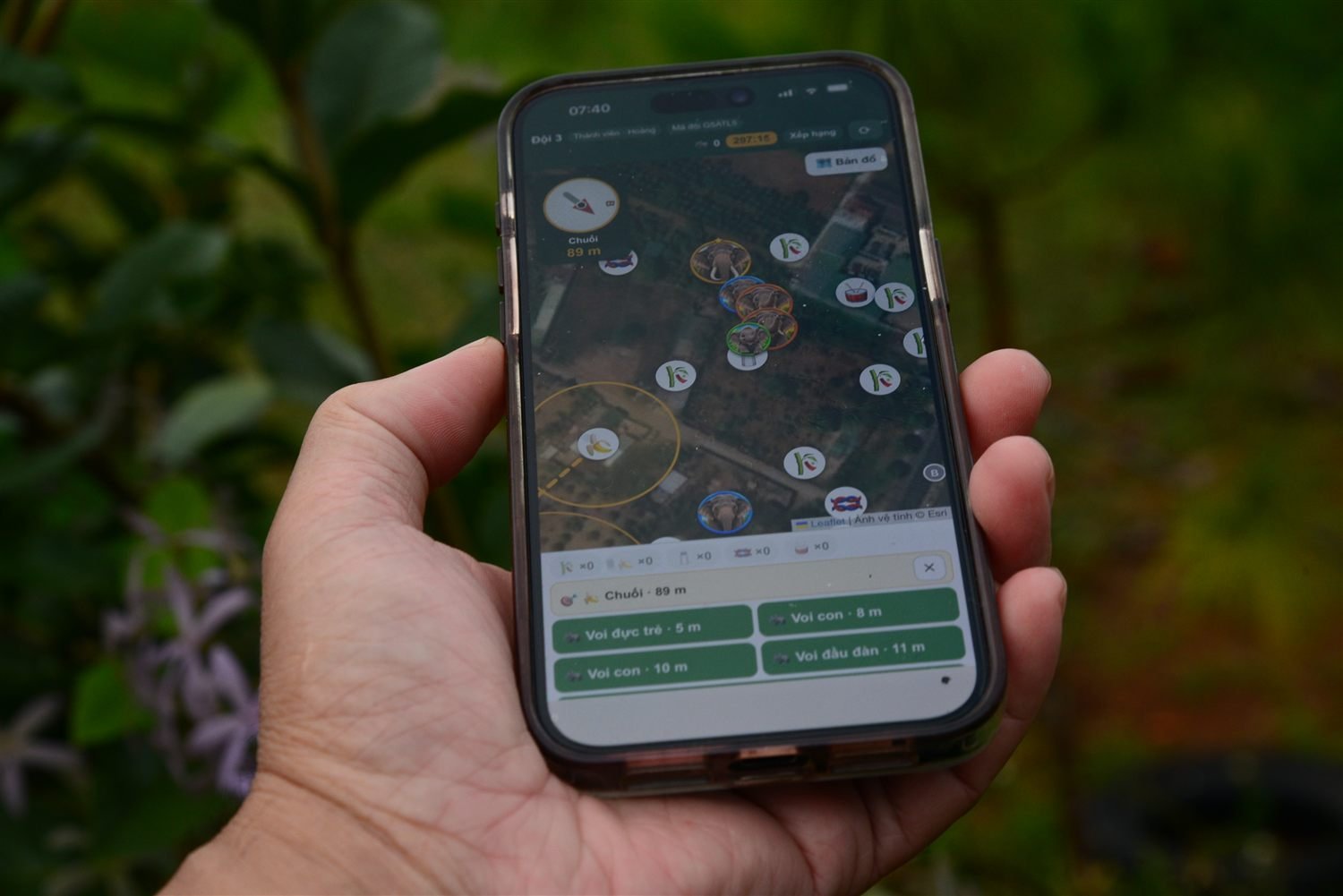
On the first proper field test, the tester walked to the Forest Gate with a line of elephants behind him, stood exactly where the map said to stand, and pressed Release. Nothing happened. The phone insisted he was 39 metres away. The release circle was 35.
Four metres. That was the gap between a game that works on a laptop and a GPS team building game that works on a hillside. This article is a look behind the scenes at what it takes to close that gap, using Elephant Trail, a game we tested step by step outdoors. If you are a planner, it should help you tell a well-built game from a fragile one.
Start with the ground, not the screen
A GPS game is laid out on a real place, so the first job is a walk. Where are the paths? Where is the pond, the fence, the car park? Where can sixty people gather at the end?
In Elephant Trail the organiser sets three things on a map: the centre and size of the play area, the Forest Gate where elephants are released, and the position of each elephant and each supply. Every item can be dragged to a new spot. On paper that sounds like a detail. On site it is the difference between a target on a footpath and one in the middle of a flower bed.
What GPS really does outdoors
Phones are not as sure of their position as the blue dot suggests. In the open, the reading is usually good to within a few metres. Under trees, beside a wall or on a slope, it can wander by ten or fifteen.
The first version of the game treated the position as exact. Field testing showed three problems straight away:
- Players stood on a target and were told they had not arrived.
- A stray tap on the map during testing overrode the real location.
- The position sometimes froze, and nobody could tell why.
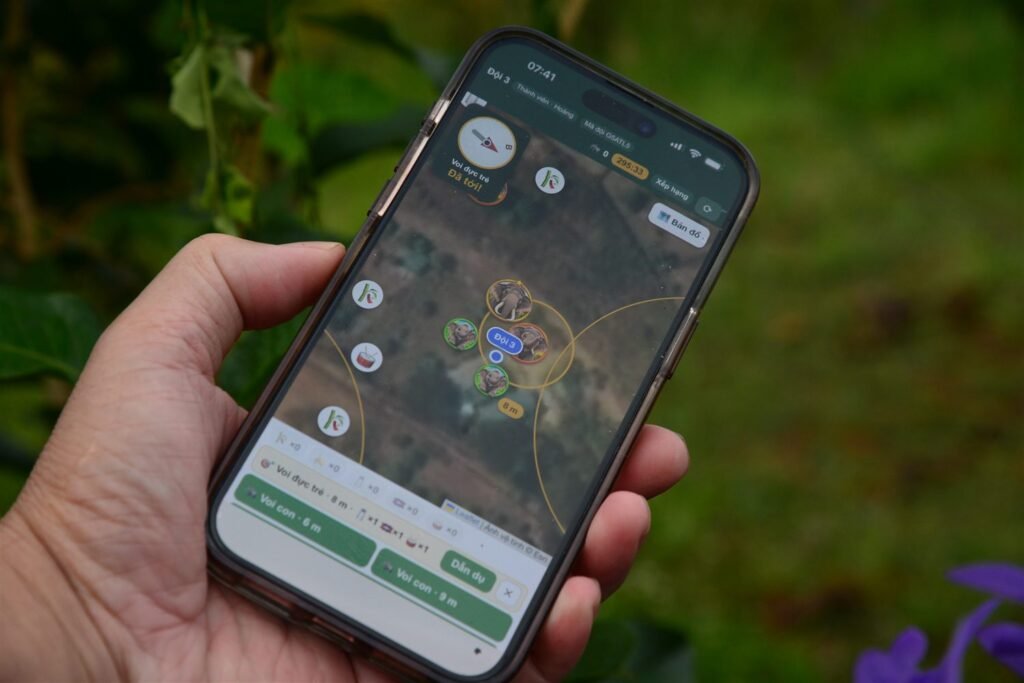
The fixes were practical. Every circle is now a little more generous, widened by the error the phone itself reports. Setting a test position needs a long press, not a tap. And the screen says plainly when the phone has blocked location access.
For planners the lesson is simple: ask whether the game has been walked at your venue. A game that has only been tested at a desk will fail in the first ten minutes.
Small screens, big thumbs, bright sun
A game played while walking is used in glances, one-handed, in daylight. That drove several changes.
The map got bigger and everything else got smaller. The panel at the bottom of the screen shrank to a single line so the map could fill the display.
Targets became tappable. Tap an elephant or a supply and a line shows the way, with the distance in metres.
The compass changed its job near the target. From far away, an arrow is useful. In the last fifteen metres, where GPS is least reliable, an arrow swings about. So close in, the compass becomes a dial that shifts colour and beeps faster as you get nearer, like a game of hot and cold.
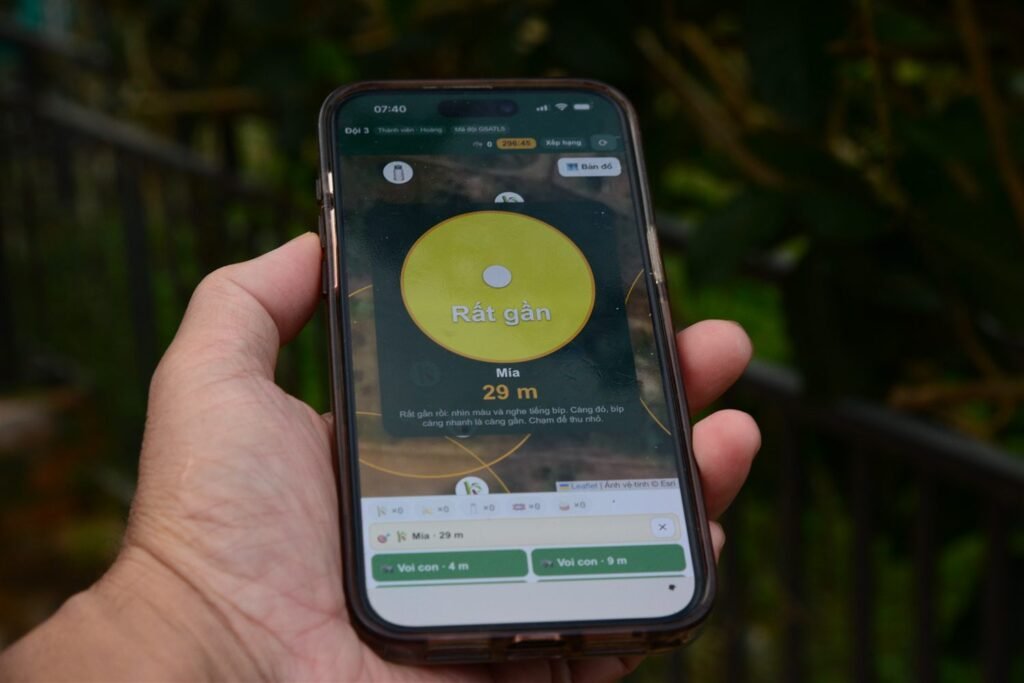
Arrival had to be felt. A chime and a vibration tell players they are in range, so they can look up from the phone and at each other.
Making the phone point outwards
The risk with any app-based activity is a group of people standing together, each looking down. Two design choices push against that.
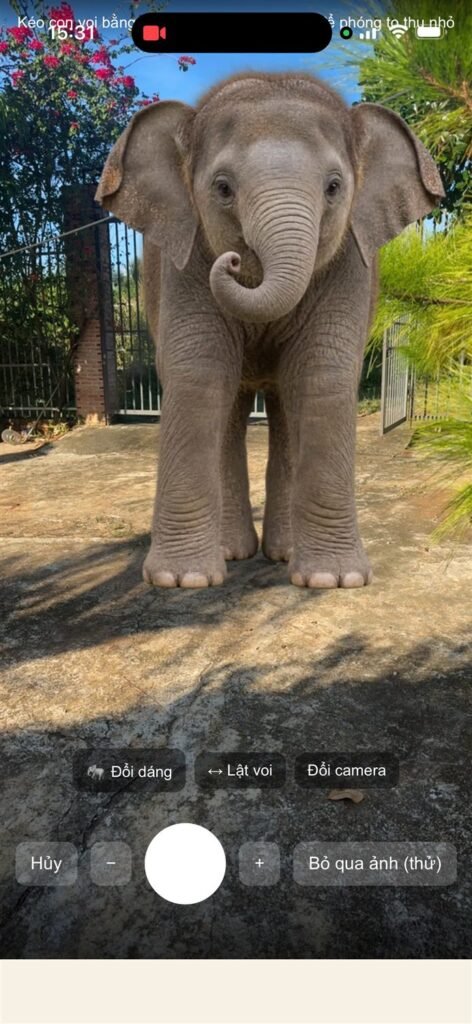
The first is the camera. When a team lures an elephant, it appears on screen in the real scene and the team poses with it. Players can change the elephant’s pose, flip it and resize it to fit the shot. It is the moment people laugh, and it gets the phone pointing at the team rather than at the floor.
The second is the roles. One player sees the whole map and cannot act. One collects supplies. One handles the elephants. The largest elephants need three people in the same place at once. Progress depends on talking.
Celebrate together
Early on, bringing an elephant home changed a number on the screen and nothing else. It felt flat. Now, every time a team’s count goes up, every phone in the team celebrates at once with a fanfare and confetti. A small thing, but it is what makes a spread-out team feel like one.
Getting back in after a dropped connection
Phones lock, batteries die and browsers close. A game for groups has to assume it. Players rejoin with nothing more than the team code and their name on a list, and the game can be added to the phone’s home screen so it opens like an app.
What this means when you book
If you are choosing a GPS game for an event, these are the questions the testing taught us to ask:
- Has it been walked at this venue, with real phones?
- How does it cope when GPS is a few metres out?
- Do guests have to install anything, or does it open in the browser?
- Can positions be adjusted on the day if a path is closed?
- Does the design make people talk, or only tap?
Frequently asked questions
Does it work in a historic city centre?
Narrow streets and tall buildings make GPS unreliable. For old towns, a trail on foot such as The Olympian Trail or The Thames Throne Trail is a better choice. GPS games suit parks, estates and resort grounds.
What do players need?
A smartphone with mobile data and location switched on. The game runs in the browser.
What language is it in?
The player screens are in English.
Is it only for young teams?
No. The pace is walking and one role is mostly map-reading and directing.
Thinking about a GPS game for your team?
Tell us where your event is and how many people are coming, and we will say honestly whether the venue suits it. See our team building programmes, browse our destinations, or contact us.